
Rejected by every VC in Silicon Valley — seven times. Two broke designers sold $40 Obama-themed cereal boxes to survive, then built a $100B hotel killer.
- How did Airbnb start?
- In October 2007, designers Brian Chesky and Joe Gebbia couldn't pay rent on their San Francisco apartment. A design conference was filling every hotel in the city, so they put three air mattresses on their living room floor, built a one-page site called airbedandbreakfast.com, and charged $80 a night with breakfast included. Three guests booked. They made about $1,000.
- What were Obama O's and Cap'n McCain's?
- In 2008, with the US presidential election under way, the Airbnb founders bought generic cereal at Costco, designed limited-edition political-themed boxes ('Obama O's' and 'Cap'n McCain's'), and sold them at $40 a box at the party conventions. They made roughly $30,000, paid off their credit-card debt, and used the story to get into Y Combinator.
- How did Airbnb grow using Craigslist?
- Engineer Nathan Blecharczyk built an unauthorised integration that let any Airbnb host, with one click, also post their listing on Craigslist with a link back to Airbnb. It reverse-engineered Craigslist's anti-bot defences and added tens of thousands of listings at zero marketing cost before Craigslist patched it. It's now a textbook growth-hacking case study.
Join 5-minute MBA lessons read by founders, students, and marketers every Sunday
SWOT Analysis
Internal strengths and weaknesses meet external opportunities and threats.
Strengths
- Asset-light marketplace — 7.7M listings with zero owned real estate
- Two-sided network effects: more hosts attract more guests, which attracts more hosts
- 48% net margin in 2023 — structurally higher than any hotel chain on earth
- Trust infrastructure (reviews, host guarantee, ID verification) built over 15 years is hard to clone
Weaknesses
- Quality inconsistency — every listing is effectively a different product the company doesn't control
- Regulatory exposure — banned or capped in NYC, Barcelona, Berlin, Paris and dozens of other cities
- Heavy dependence on Google search for top-of-funnel discovery
- Hosts can leave for Vrbo, Booking.com, or direct bookings with near-zero switching cost
Opportunities
- Long-term stays (28+ nights) — the fastest growing segment post-COVID
- Experiences and services beyond accommodation — a near-untapped take-rate stream
- Emerging-market expansion in India, Brazil, Indonesia where domestic travel is booming
- AI-driven concierge, pricing, and matching could lift take rate without new supply
Threats
- City-by-city regulation that restricts short-term rentals (already costing 1M+ listings globally)
- Booking.com and Vrbo aggressively chasing the same alternative-accommodation supply
- Hotel chains rebuilding mobile, loyalty, and pricing tech post-COVID
- Macro travel downturns hit a 100% travel-exposed business harder than diversified incumbents
Strategic takeaway · Airbnb's defensibility isn't the technology — it's the 15-year head start on building the world's largest two-sided trust network. The real moat is that no new entrant can manufacture 5 million hosts and a billion reviews from scratch, no matter how much capital they raise.
In October 2007, two unemployed Rhode Island School of…
In October 2007, two unemployed Rhode Island School of Design graduates — Brian Chesky and Joe Gebbia — were sharing an apartment in San Francisco and couldn't make the $1,150 rent. A design conference was coming to town, every hotel in the city was sold out, and they had three spare air mattresses. They threw up a one-page website called airbedandbreakfast.com, offering $80 a night for a mattress on the floor plus a homemade breakfast. Three people booked. They made $1,000. The idea was supposed to be a one-time rent hack. Instead, it became the seed of a company that, 15 years later, would be worth more than Marriott, Hilton, and Hyatt combined.
The pitch sounded insane in 2008: convince complete strangers to sleep in other strangers' homes, sight unseen, in cities where they didn't speak the language. Every investor they met said no. Chesky and Gebbia, now joined by their old roommate and engineer Nathan Blecharczyk, pitched 15 investors at $150,000 for a 10% stake — a $1.5 million valuation. Seven of them didn't even reply. The other eight said the market was too small, the idea was too creepy, or the founders were 'not technical enough'. Paul Graham of Y Combinator initially passed too. The company had $20,000 in credit-card debt and was burning $1,000 a week with no revenue model that anyone in Silicon Valley believed in.
What saved Airbnb wasn't a pivot — it was a cereal box. In summer 2008, with the US presidential election in full swing, the founders bought generic cereal at Costco, designed limited-edition political-themed boxes — 'Obama O's: The Breakfast of Change' and 'Cap'n McCain's: A Maverick in Every Bite' — and sold them at $40 a box at the Democratic and Republican conventions. They made about $30,000 in a few weeks, paid off their credit-card debt, and walked into Y Combinator's W09 batch with a story Paul Graham later called the single best founder pitch he ever heard: 'If we can convince people to pay $40 for a $4 box of cereal, we can convince them to sleep on a stranger's air mattress.' YC gave them $20,000 for 6%. The cereal, not the product, got them in.
Inside Y Combinator the founders did something most startups…
Inside Y Combinator the founders did something most startups never do — they flew to New York City, where most of their early hosts lived, and physically knocked on doors. They showed up with a $5,000 camera Paul Graham had told them to borrow and re-shot every listing's photos for free. Within a month, weekly revenue in New York doubled. The lesson — that the bottleneck wasn't supply or demand, it was the quality of the listing — became the founding insight that would scale to 7 million listings worldwide. As Paul Graham famously told them: 'It's better to have 100 people who love you than 1 million people who sort of like you.' Airbnb's entire early product roadmap was built around making 100 hosts in New York love them, then copy-pasting that playbook city by city.
Then came the growth hack that should be taught in every MBA program. Craigslist in 2009 had millions of people listing rooms for rent. Airbnb didn't have users. So engineer Nathan Blecharczyk built a custom integration — without Craigslist's permission — that let any Airbnb host, with one click, also post their listing to Craigslist with a link back to Airbnb. The integration reverse-engineered Craigslist's anti-bot defences, auto-filled forms, and even matched the email-confirmation flow. It was, technically, against Craigslist's terms of service. It also added tens of thousands of new listings to Airbnb in a few months at zero customer-acquisition cost. By the time Craigslist patched the loophole, Airbnb had achieved escape velocity. Without that single piece of grey-area code, Airbnb might not exist today.
By 2011 Airbnb was doing 1 million nights booked and had raised a $112 million Series B from Andreessen Horowitz at a $1.3 billion valuation — making it one of the youngest unicorns in tech history. But the business almost died again in July 2011 when a host named EJ published a viral blog post titled 'Violated' describing how an Airbnb guest had ransacked her home. The press cycle was brutal — coverage on every major outlet, regulators sniffing around in NYC and San Francisco, and a wave of host cancellations. Chesky's response defined the company's culture: he announced a $50,000 host guarantee (later raised to $1 million), launched 24/7 customer service, and personally responded to thousands of host emails. The same crisis that should have killed the company turned trust — which everyone had said was an unsolvable problem — into Airbnb's primary moat.
Netflix built a marketplace where Blockbuster owned the inventory — same insight Airbnb used to flatten the hotel industry.
The business model itself is deceptively simple but financially…
The business model itself is deceptively simple but financially brilliant. Airbnb takes roughly 14–16% of every booking (3% from the host, the rest from the guest). It owns zero real estate, employs zero housekeepers, and has near-zero variable cost per night booked. Compare that to Marriott: Marriott has roughly 1.6 million rooms across 30+ brands, employs over 400,000 people, and spent 50+ years signing real-estate contracts. Airbnb passed 1.6 million listings in 2014 — in six years, with about 600 employees. By 2023, Airbnb's listings had grown to 7.7 million across 220+ countries, more than the next 5 hotel chains combined. The platform processed 448 million nights and experiences booked in 2023, generating $9.9 billion in revenue and $4.8 billion in net income — a 48% net margin that no hotel company on earth comes close to.
The asset-light model is also why Airbnb survived COVID-19 when most of travel collapsed. In April 2020, bookings fell 96% in eight weeks. Marriott furloughed 130,000 staff. Hilton cut 22% of its workforce. Airbnb laid off 1,900 of its 7,500 employees, raised $2 billion in emergency debt at 11% interest from Silver Lake and Sixth Street, and shifted product priority to long-term and domestic stays. Within 12 months, Airbnb had IPO'd at a $47 billion valuation — which more than doubled on the first day of trading to over $100 billion. The pandemic, paradoxically, accelerated the shift from hotels to homes by 5–10 years, because people wanted private kitchens, separate entrances, and the ability to work remotely from anywhere with Wi-Fi.
Today the numbers are staggering. Over 5 million hosts have collectively earned more than $250 billion through the platform since 2008. Airbnb has more listings than the top 5 hotel chains (Marriott, Hilton, IHG, Wyndham, Accor) combined. Its market cap fluctuates around $80–100 billion — comparable to Marriott ($80B) and Hilton ($55B) individually, despite the fact that Airbnb is roughly 15 years old versus their 100. The company's gross booking value crossed $73 billion in 2023. And critically, Airbnb's 'take rate' of ~14% on every booking is essentially pure margin: the founders built a marketplace where the supply side (homeowners) and the demand side (travellers) both pay them to introduce each other, in perpetuity.
Theres a deeper strategic insight in the Airbnb story…
There's a deeper strategic insight in the Airbnb story that gets lost in the founder lore. Chesky, Gebbia, and Blecharczyk didn't out-execute the hotel industry on hotels. They out-thought it on a question hotels weren't even asking: 'What if the supply of accommodation didn't have to be built?' Every hotel chain on earth in 2008 was constrained by the same brutal economics — land, construction, staffing, financing. Airbnb's insight was that there were already 100+ million spare bedrooms in the developed world, sitting empty, owned by people who would gladly rent them out for an extra $500 a month. The hotel industry had assumed for 100 years that hospitality required real estate. Airbnb proved hospitality required only a database, a payments system, and a review mechanism.
The Craigslist hack, the cereal boxes, the doorbell photos in New York — these aren't quirky anecdotes. They're the same principle expressed three different ways: when you have no money and no users, you have to break rules other people are following without questioning. Hotels couldn't copy the Craigslist integration without compromising their brands. Hotels couldn't survive a year selling political cereal. Hotels couldn't have their CEO personally photograph 1,000 of their own properties. The reason Airbnb won isn't that they had a better idea — it's that they were willing to be embarrassed in ways larger competitors weren't.
The harder lesson, the one most founders miss, is timing combined with willingness to be unglamorous. Airbnb launched in 2008 during the worst financial crisis since 1929. People were losing homes and needed extra income. Hotels were laying off staff and losing pricing power. The iPhone had launched 18 months earlier, suddenly putting GPS, photos, and instant payments in everyone's pocket. The trust mechanisms — Facebook profiles, two-way reviews, mobile verification — were all just becoming culturally normal. If Chesky had launched Airbnb in 2005, none of the technology infrastructure would have existed. If he had launched in 2013, hotels would have had a five-year head start on building competing apps. The window was roughly 24 months wide. He hit it.
Zepto built dark stores from scratch. Airbnb proved you don't need to own the supply at all.
Airbnbs market cap of ~$95 billion in 2024 is…
Airbnb's market cap of ~$95 billion in 2024 is built on a structural truth that most entrepreneurs refuse to accept: the most valuable businesses are usually not the ones with the best product, but the ones that connect a fragmented supply to a fragmented demand and take a small cut forever. Uber did it with cars. DoorDash did it with restaurants. Airbnb did it with bedrooms. None of them own the underlying asset. All of them are worth more than the asset-heavy incumbents they disrupted. The Airbnb story isn't really about hospitality. It's about the moment a generation of founders realised that in a smartphone-and-broadband world, the company that owns the marketplace beats the company that owns the inventory — every single time.

Rapido: How Three Engineers Turned a Joke Called 'Bike Taxi' Into a $1.1 Billion Unicorn
More case studies
View all →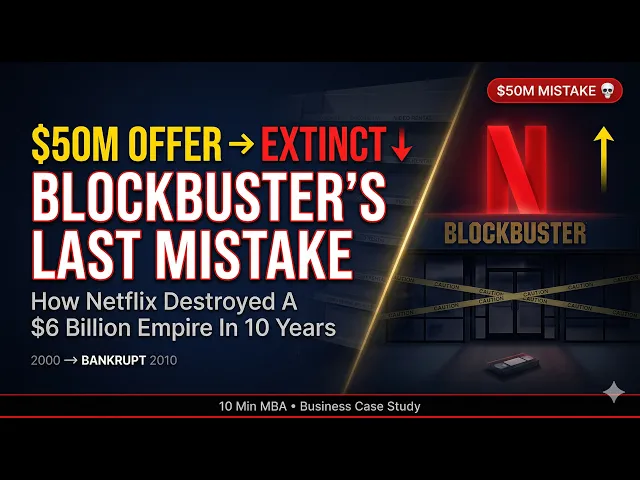


Frequently asked questions
How did Airbnb start?
In October 2007, designers Brian Chesky and Joe Gebbia couldn't pay rent on their San Francisco apartment. A design conference was filling every hotel in the city, so they put three air mattresses on their living room floor, built a one-page site called airbedandbreakfast.com, and charged $80 a night with breakfast included. Three guests booked. They made about $1,000.
What were Obama O's and Cap'n McCain's?
In 2008, with the US presidential election under way, the Airbnb founders bought generic cereal at Costco, designed limited-edition political-themed boxes ('Obama O's' and 'Cap'n McCain's'), and sold them at $40 a box at the party conventions. They made roughly $30,000, paid off their credit-card debt, and used the story to get into Y Combinator.
How did Airbnb grow using Craigslist?
Engineer Nathan Blecharczyk built an unauthorised integration that let any Airbnb host, with one click, also post their listing on Craigslist with a link back to Airbnb. It reverse-engineered Craigslist's anti-bot defences and added tens of thousands of listings at zero marketing cost before Craigslist patched it. It's now a textbook growth-hacking case study.
How does Airbnb make money?
Airbnb takes a service fee of roughly 14–16% on every booking — about 3% from the host and the rest from the guest. It owns no real estate and has near-zero variable cost per booking, which is why it operated at a 48% net margin and $4.8 billion in net income in 2023.
How is Airbnb bigger than the major hotel chains?
Airbnb had 7.7 million active listings across 220+ countries by 2023 — more than the top 5 hotel chains (Marriott, Hilton, IHG, Wyndham, Accor) combined. It processed 448 million nights and experiences booked in 2023 with about 6,800 employees, versus Marriott's ~400,000 employees and 1.6 million rooms.
Get one insanely useful business case study every Sunday
Free weekly business breakdowns that make you smarter about startups, strategy, and growth. Plus the free Strategy Frameworks PDF when you subscribe.
No spam. Unsubscribe anytime.