
Kodak vs Fujifilm — Same Industry, Opposite Endings
Both companies invented the future. Only one was willing to use it.
Kodak
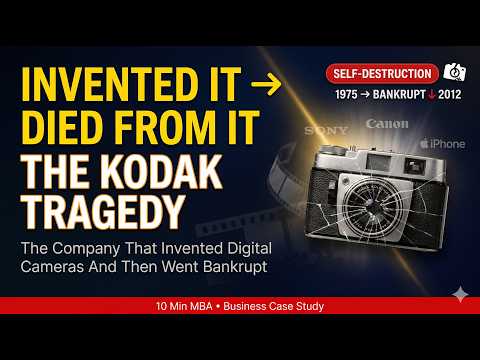
Invented the digital camera in 1975. Filed Chapter 11 in 2012.
Read the Kodak breakdown →Fujifilm
Pivoted into cosmetics, healthcare, and advanced materials.
Why this matchup matters
Kodak vs Fujifilm is the cleanest natural experiment in business history. Two companies, same product, same threat, same decade. One adapted; one didn't. The variable wasn't intelligence or resources — Kodak had more of both. It was willingness to abandon a profitable identity.
Fujifilm's chairman Shigetaka Komori made the call in 2000: film is dead, and we have to become a different company. Kodak's leadership made the opposite call, repeatedly, even as their own engineers handed them the digital camera 25 years earlier.
Side-by-side
| Kodak | Fujifilm | |
|---|---|---|
| Peak film market share (US) | ~90% (1976) | ~17% (peak global challenger) |
| Response to digital | Sat on patents to protect film | Restructured by 2003; pivoted by 2006 |
| Diversification bet | Stayed in imaging + photo printing | Cosmetics (Astalift), healthcare, LCD films, regenerative medicine |
| R&D as % of revenue (post-pivot) | Slashed | ~7% — sustained investment |
| Workforce at peak | 145,300 (1988) | ~80,000 (2024) |
| 2012 outcome | Filed for Chapter 11 bankruptcy | Posted ¥2.2 trillion revenue |
| 2024 status | $1B+ specialty printing company | $30B+ diversified conglomerate |
Go deeper
The full breakdowns behind this matchup.
Frequently asked questions
Did Kodak really invent the digital camera?
Yes. Kodak engineer Steven Sasson built the first working digital camera in 1975 — an 8-pound prototype that captured 0.01 megapixel black-and-white images to a cassette tape. Kodak patented it, then shelved it for fear of cannibalising film sales.
How is Fujifilm still profitable today?
Less than 15% of Fujifilm's revenue now comes from photography. The bulk comes from healthcare (medical imaging, biologics manufacturing), advanced materials (touchscreen films, semiconductor materials), and document services (acquired Xerox's Asia-Pacific business in 2021).
What was Kodak's biggest strategic mistake?
Treating digital photography as a threat to film instead of a new business to win. Kodak licensed its digital patents instead of building cameras and ecosystems around them, then gave up the lead to Sony, Canon, and eventually smartphones.
Why did Fujifilm enter cosmetics?
Photographic film and human skin both rely on collagen. Fujifilm's chemists realised the antioxidants developed to prevent film fading could prevent skin ageing. Astalift launched in 2007 and became a profitable Asian skincare brand — built entirely on film R&D.
More head-to-head matchups
Netflix vs Blockbuster
How a $50 million startup destroyed a $5 billion incumbent in 10 years.
Zara vs H&M
Same shelf, same shopper, same price tag. Completely different business model.
Campa Cola vs Coca-Cola
A ₹22 crore acquisition vs a ₹70,000 crore market leader. Reliance is playing for keeps.
Get one insanely useful business case study every Sunday
Free weekly business breakdowns that make you smarter about startups, strategy, and growth. Plus the free Strategy Frameworks PDF when you subscribe.
No spam. Unsubscribe anytime.