
Netflix vs Blockbuster — The Defining Disruption Case Study
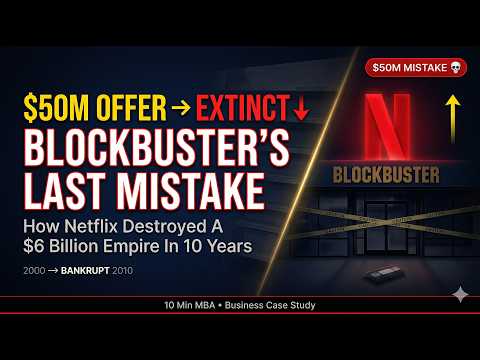
How a $50 million startup destroyed a $5 billion incumbent in 10 years.
Netflix
The DVD-by-mail challenger that bet on streaming.
Read the Netflix breakdown →Blockbuster
The 9,000-store rental empire that refused to cannibalise itself.
Why this matchup matters
Netflix vs Blockbuster is the textbook case for innovator's dilemma. Blockbuster wasn't blind — they saw streaming coming. They just couldn't bring themselves to kill the late-fee revenue line that made them profitable, so they let a competitor do it for them.
Every incumbent facing digital disruption — newspapers, retail banks, taxi companies, traditional automakers — replays some version of this matchup. The lesson isn't 'be more innovative'; it's 'be willing to cannibalise your own profits before someone else does it for free'.
Side-by-side
| Netflix | Blockbuster | |
|---|---|---|
| Founded | 1997 (Reed Hastings, Marc Randolph) | 1985 (David Cook) |
| Peak revenue | $33.7B (2023) | $5.9B (2004) |
| Peak market value | $300B+ (2021) | $8.4B (2002) |
| Business model | Subscription (no late fees) | Per-rental + late fees (~$800M/yr revenue line) |
| Moat | Tech infrastructure + recommendation data + originals | Physical store density and shelf space |
| Cost structure | Variable (servers, licensing) | Fixed (9,000 stores, leases, staff) |
| Pivotal moment | Launched streaming in 2007 | Rejected $50M Netflix acquisition in 2000 |
| Outcome | $200B+ company, 280M+ subscribers | Bankruptcy 2010; one store remains in Bend, Oregon |
Go deeper
The full breakdowns behind this matchup.
Frequently asked questions
Did Netflix really offer to sell itself to Blockbuster?
Yes. In 2000, Reed Hastings and Marc Randolph offered Netflix to Blockbuster CEO John Antioco for $50 million. Antioco reportedly laughed them out of the room. Netflix is now worth over 4,000x that figure.
Why did Blockbuster fail when it had a streaming service?
Blockbuster launched a competing online and DVD-by-mail service (Total Access) in 2006 and was actively winning subscribers from Netflix. But CEO John Antioco was pushed out in a boardroom fight led by Carl Icahn over the cost of dropping late fees, and his replacement reversed course to protect store revenue.
What killed Blockbuster — Netflix or late fees?
Both, and they're connected. Late fees generated ~$800M annually for Blockbuster — about 16% of revenue. Netflix's 'no late fees' subscription model was specifically designed to attack this. Blockbuster couldn't drop late fees without crashing its P&L, and couldn't keep them without losing customers.
How big was Netflix when Blockbuster declined to buy it?
Netflix had about 300,000 subscribers, $5M in losses, and was burning cash on DVD shipping. By the time Blockbuster declared bankruptcy in 2010, Netflix had 20 million subscribers and was worth ~$10 billion.
More head-to-head matchups
Kodak vs Fujifilm
Both companies invented the future. Only one was willing to use it.
Zara vs H&M
Same shelf, same shopper, same price tag. Completely different business model.
Campa Cola vs Coca-Cola
A ₹22 crore acquisition vs a ₹70,000 crore market leader. Reliance is playing for keeps.
Get one insanely useful business case study every Sunday
Free weekly business breakdowns that make you smarter about startups, strategy, and growth. Plus the free Strategy Frameworks PDF when you subscribe.
No spam. Unsubscribe anytime.